EQUIPMENT
DF-GEN-01 concept fixture
Configuration, named parts and source limitations.
Equipment record ↗
GENERATOR MAINTENANCE
One permitted configuration, a tangible service sequence and a clear path from rehearsal to supervised training.
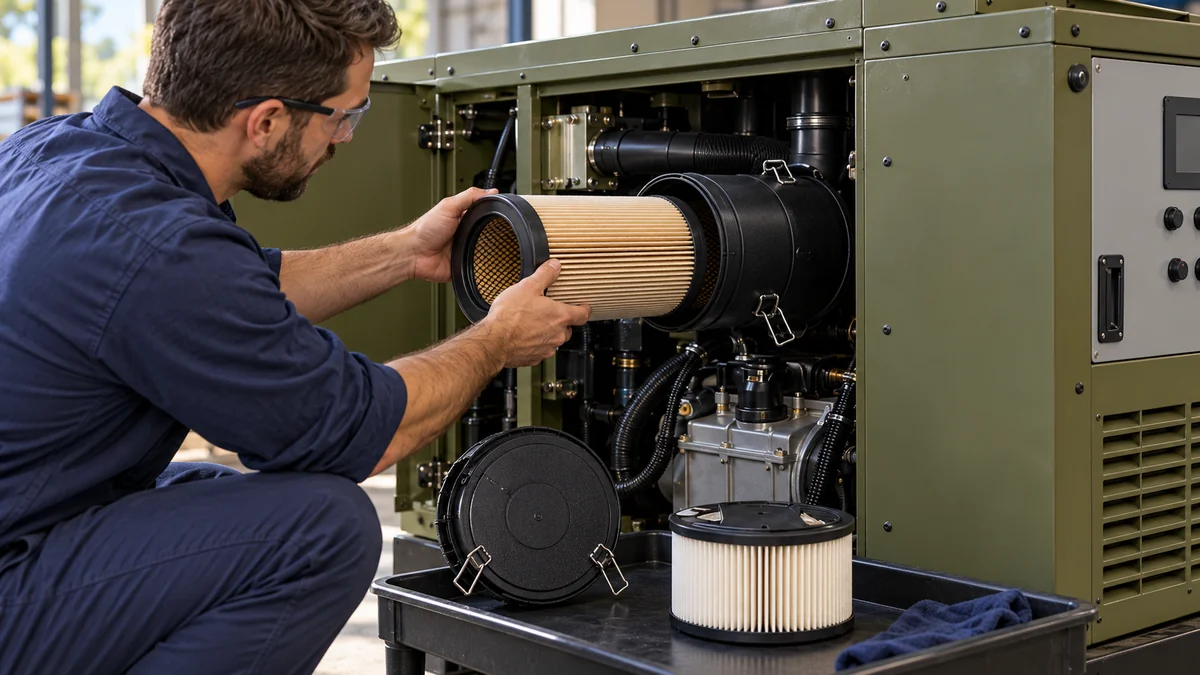
WHO IT SERVES
For an instructor, maintainer or support-equipment lead with a repeatable training task and an authorised source owner.
Can the learner explain the configuration and recognise when to stop?
Review the sequence alongside the human inspection record.
Retain what happened, its disposition and the responsible owner.
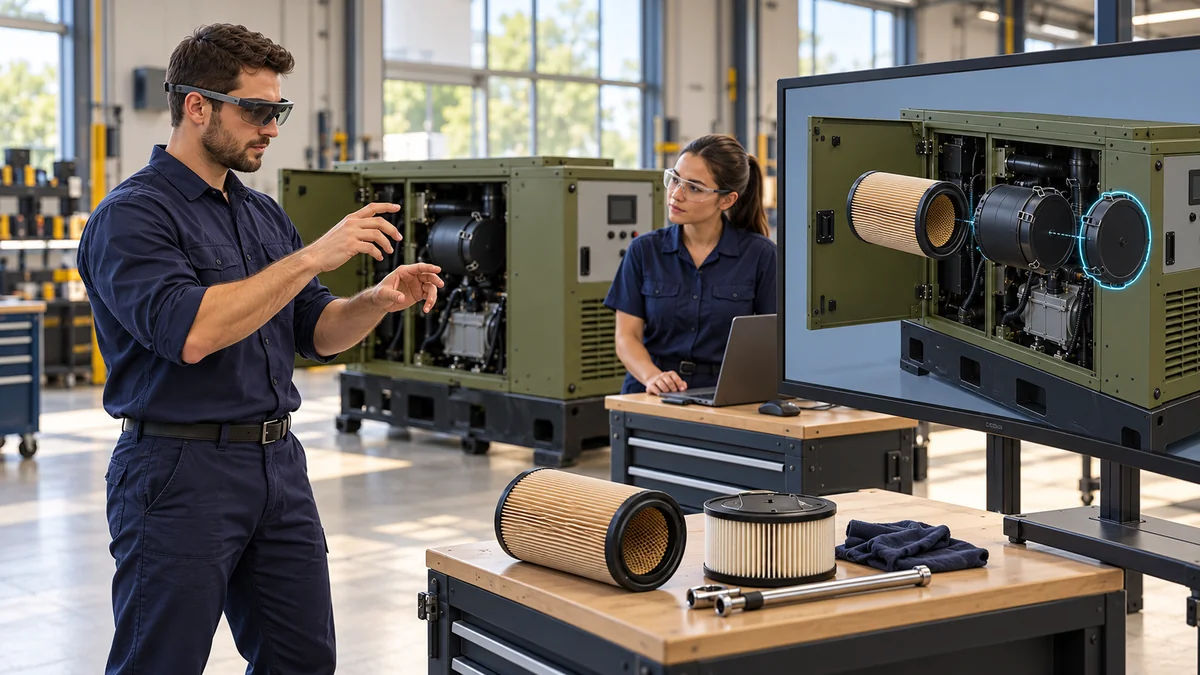
01 / PREPARE IN GENESIS
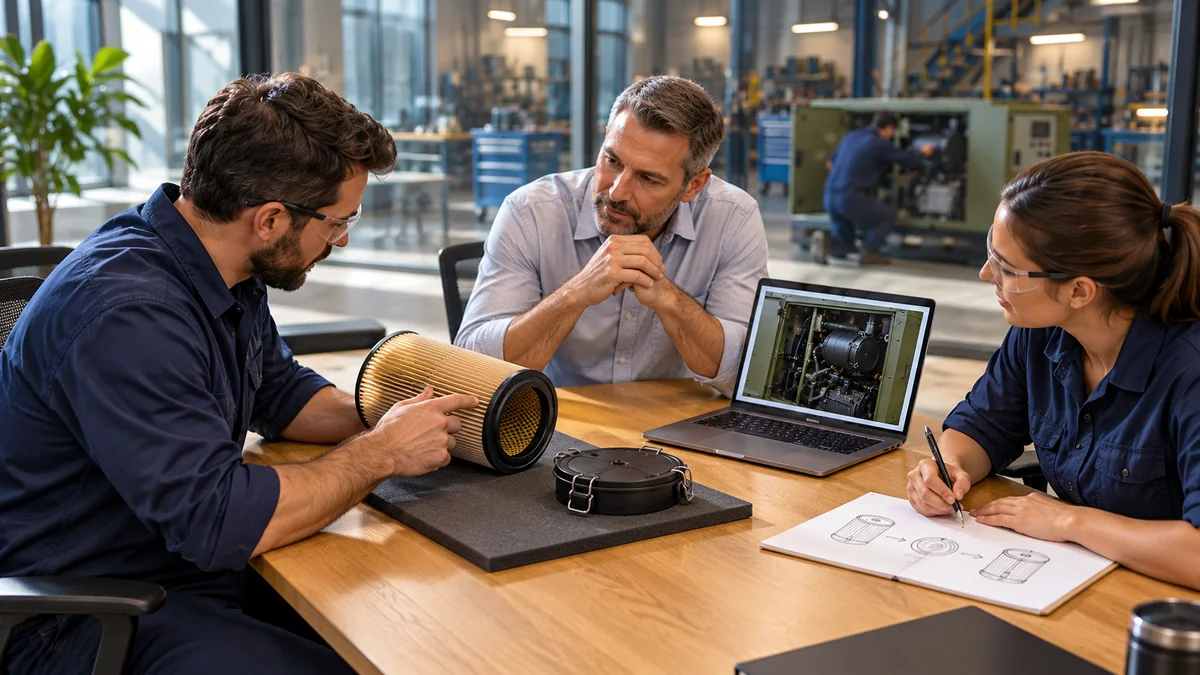
Link the reviewed procedure to the equipment. Open the door, release the cover and move the element along its real path. The learner must decide when a replacement needs a configuration check.
The instructor reviews the lesson and assessment before release.
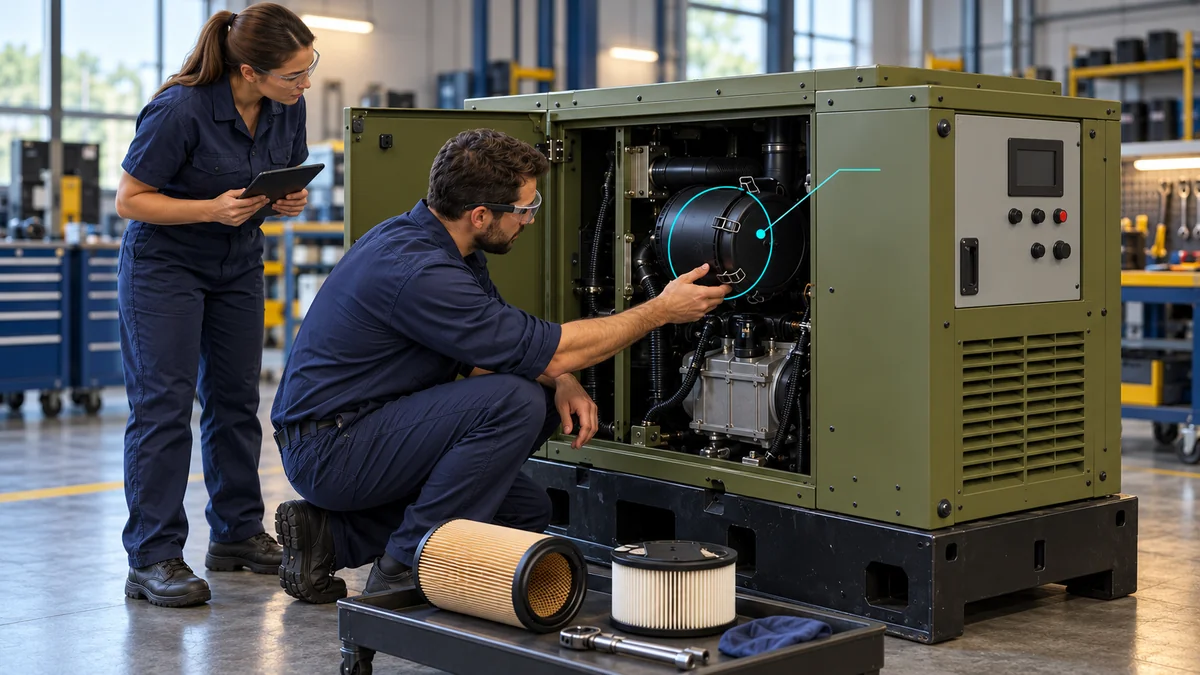
02 / SUPERVISED WORK
Confirm the asset and revision. Guide the training run, bring the approved reference into the exception and let the instructor verify the recovery.
After reassembly and review, training evidence can be complete. Real service-release authority stays separate.
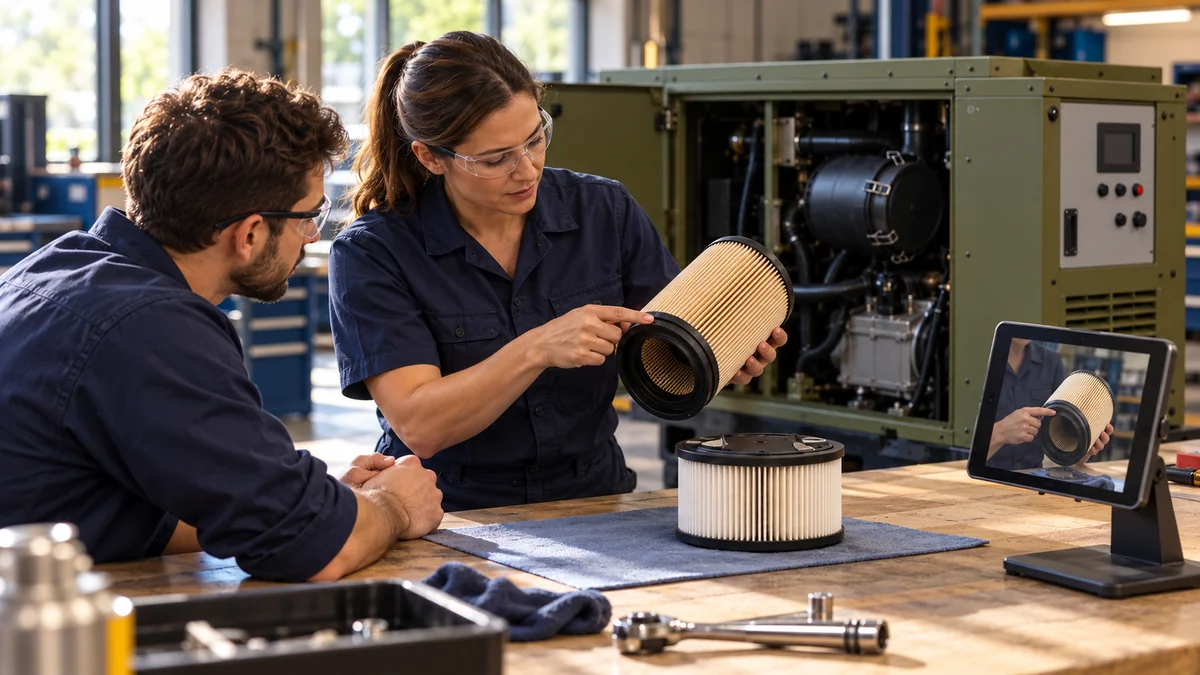
03 / KEEP THE REASONING
A clear explanation of the end profile can matter as much as the sequence. Keep that rationale with the source, then test whether another maintainer can apply it.
Explore expert knowledge transfer ↗DF-GEN-01 is an original inert generator training concept. A/B part tags are fictional. A funded sponsor selects the real configuration, approved procedure, permitted data and qualified reviewer before a customer-specific build. The imagery is not a released OEM service instruction.
ONE TASK. A PRACTICAL START.
Bring one unclassified maintenance challenge. Together, define the equipment, sources, acceptance owner and evidence a pilot should produce.
Request a demo clinic ↗CONNECTED SOURCE PACKAGE
EQUIPMENT
Configuration, named parts and source limitations.
Equipment record ↗MODEL + IMAGES
An actual named 3D asset and linked concept reference states.
Inspect the model ↗PROCEDURE + REVIEW
Concept steps, expected observations and responsible review.
Procedure library ↗